HOW HEBRA THINKS
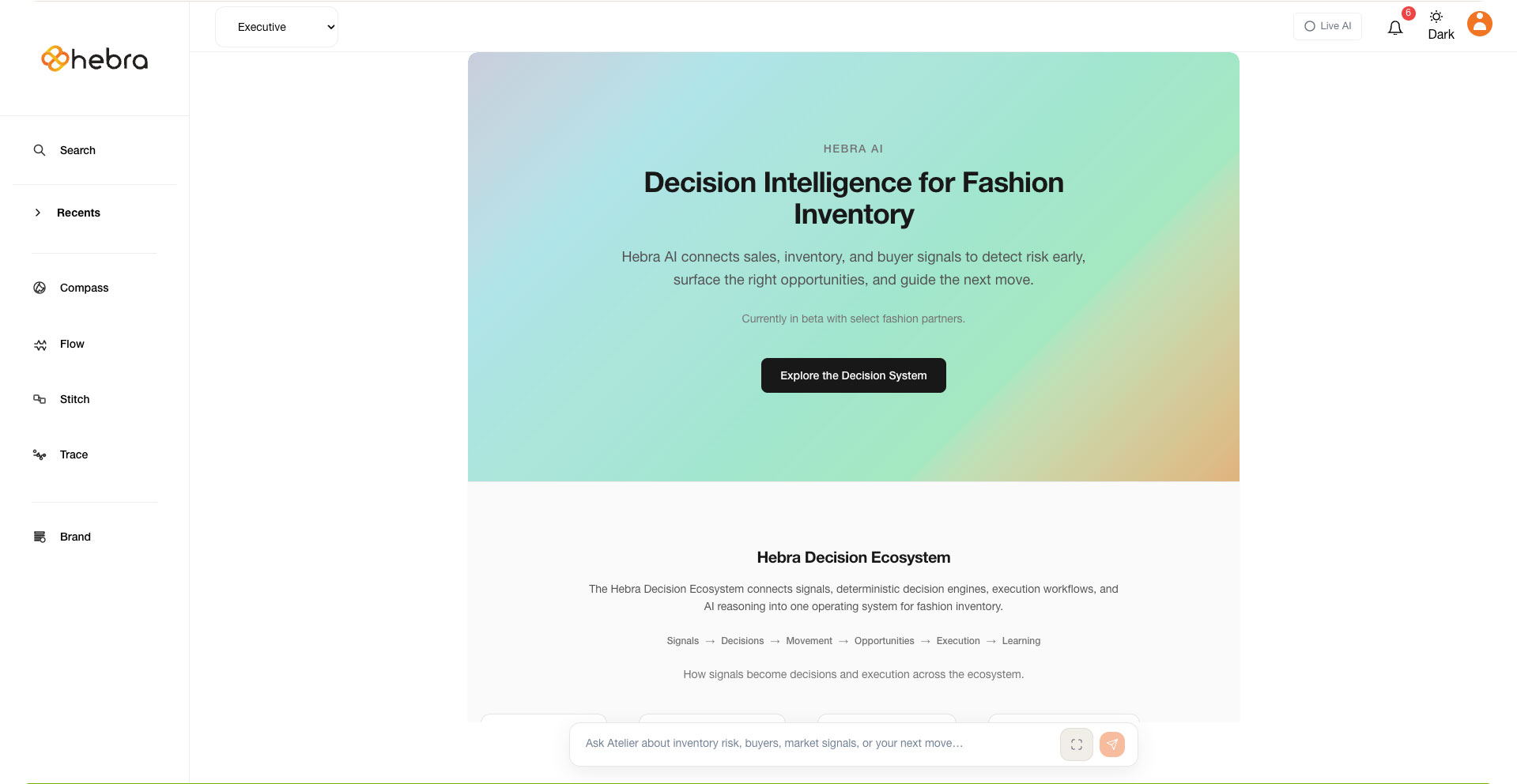
The Hebra Decision Intelligence System
Signals move through Hebra's decision system — detecting inventory exposure, structuring allocation decisions, identifying market opportunities, and guiding commercial execution.
Each module plays a specific role in transforming operational signals into structured decisions.
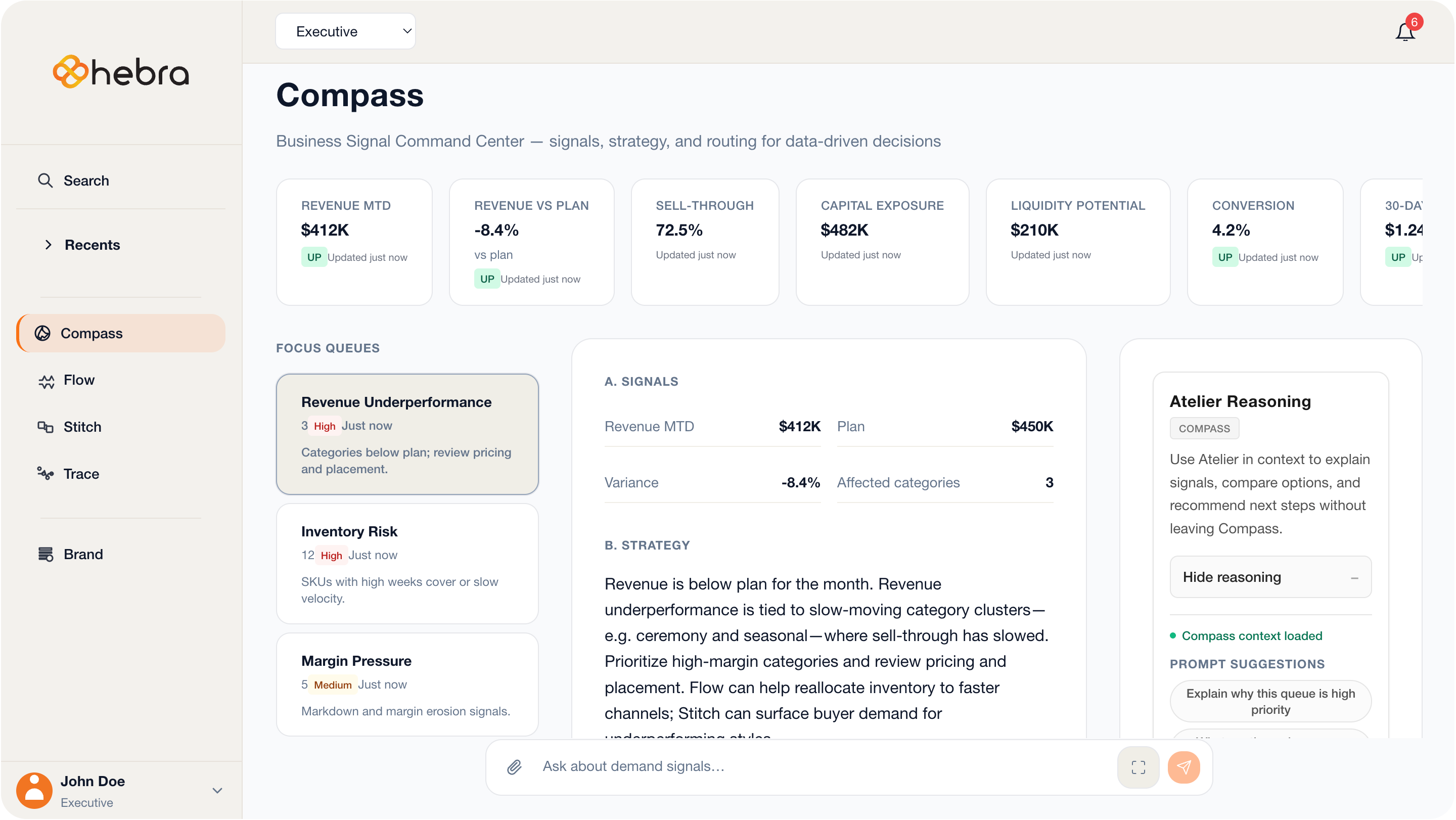
Compass
Business Signal Command Center
See the business clearly and route decisions faster.
Compass consolidates revenue, inventory, demand, and market signals into a unified command layer. It surfaces performance risks, organizes them into focus queues, and connects teams directly to the next operational path across Flow, Stitch, and Atelier.
Capabilities
- Unified monitoring across revenue, inventory, margin, and demand
- Focus queues highlighting risk across categories and SKUs
- Signal-to-strategy context explaining why signals matter
- Direct routing into Flow, Stitch, and Atelier
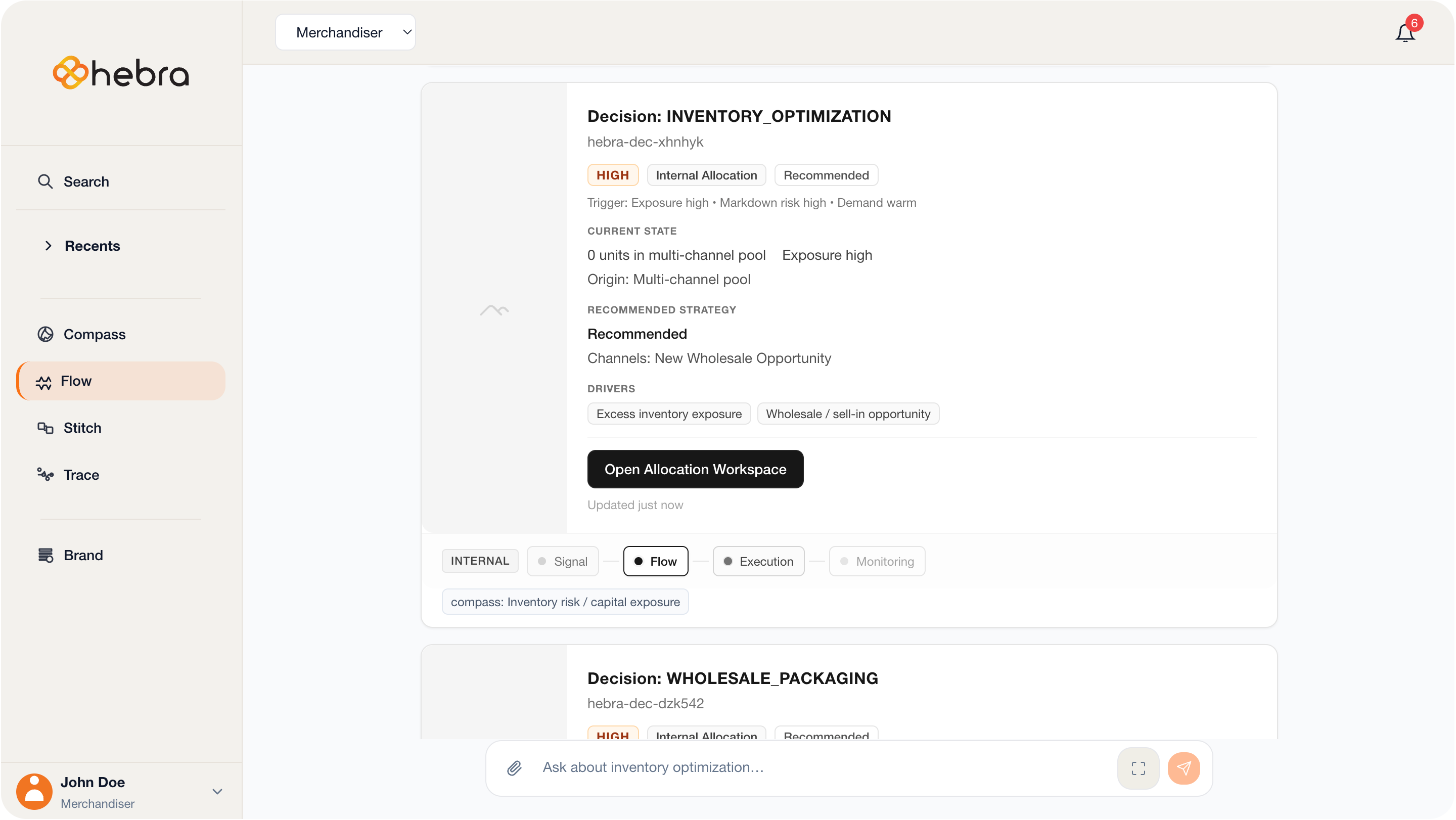
Flow
Inventory Decision Engine
Turn operational signals into structured inventory decisions.
Flow converts Compass signals into prioritized decisions organized in a Decision Queue. Each decision includes recommended movement scenarios, drivers, and projected impact so teams can evaluate tradeoffs before inventory moves.
Capabilities
- Decision Queue prioritizing inventory actions
- Recommended movement scenarios based on exposure signals
- Decision drivers and reasoning for each recommendation
- Impact modeling across margin, exposure, and conversion timing
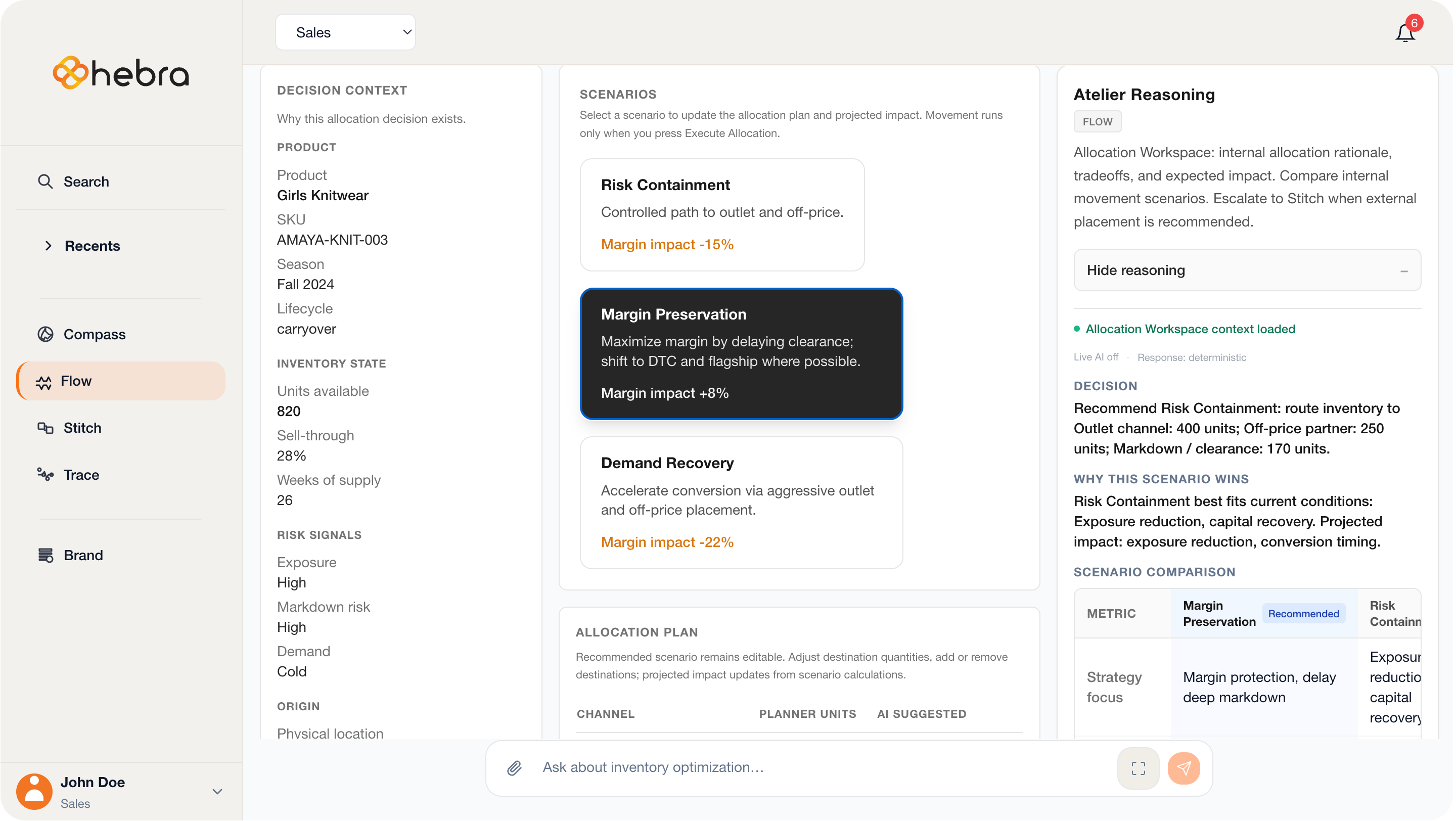
Allocation Workspace
Scenario Modeling & Allocation Execution
Model the move before inventory moves.
Allocation Workspace is where Flow decisions become allocation plans. Teams can compare scenarios, adjust destination quantities, and evaluate projected impact before executing inventory movement.
Capabilities
- Scenario-based allocation planning across channels and destinations
- Editable movement plans with real-time impact updates
- Exposure and markdown risk modeling
- Embedded Atelier reasoning explaining tradeoffs
Stitch
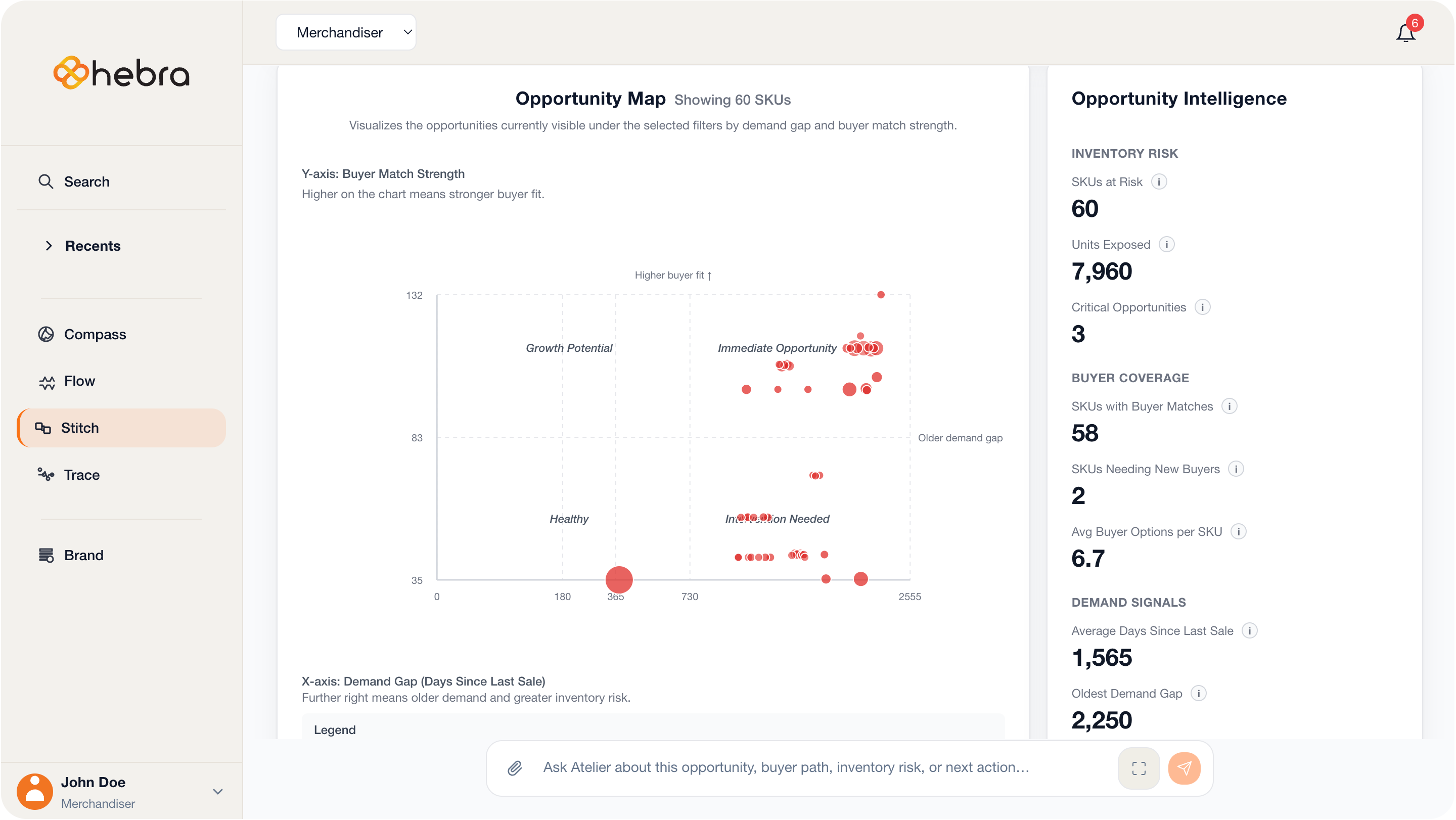
Market Opportunity Engine
Identify where inventory can move when internal channels are not enough.
Stitch analyzes buyer portfolios, demand signals, and assortment compatibility to surface external market opportunities for excess inventory.
Capabilities
- Demand-gap detection across aging and slow-moving inventory
- Buyer compatibility scoring across retailer portfolios
- Opportunity Map visualizing buyer fit and inventory exposure
- Opportunity packaging for external sell-in workflows
Deal Room
Commercial Execution Workspace
Package the opportunity. Align the buyer. Prepare the next move.
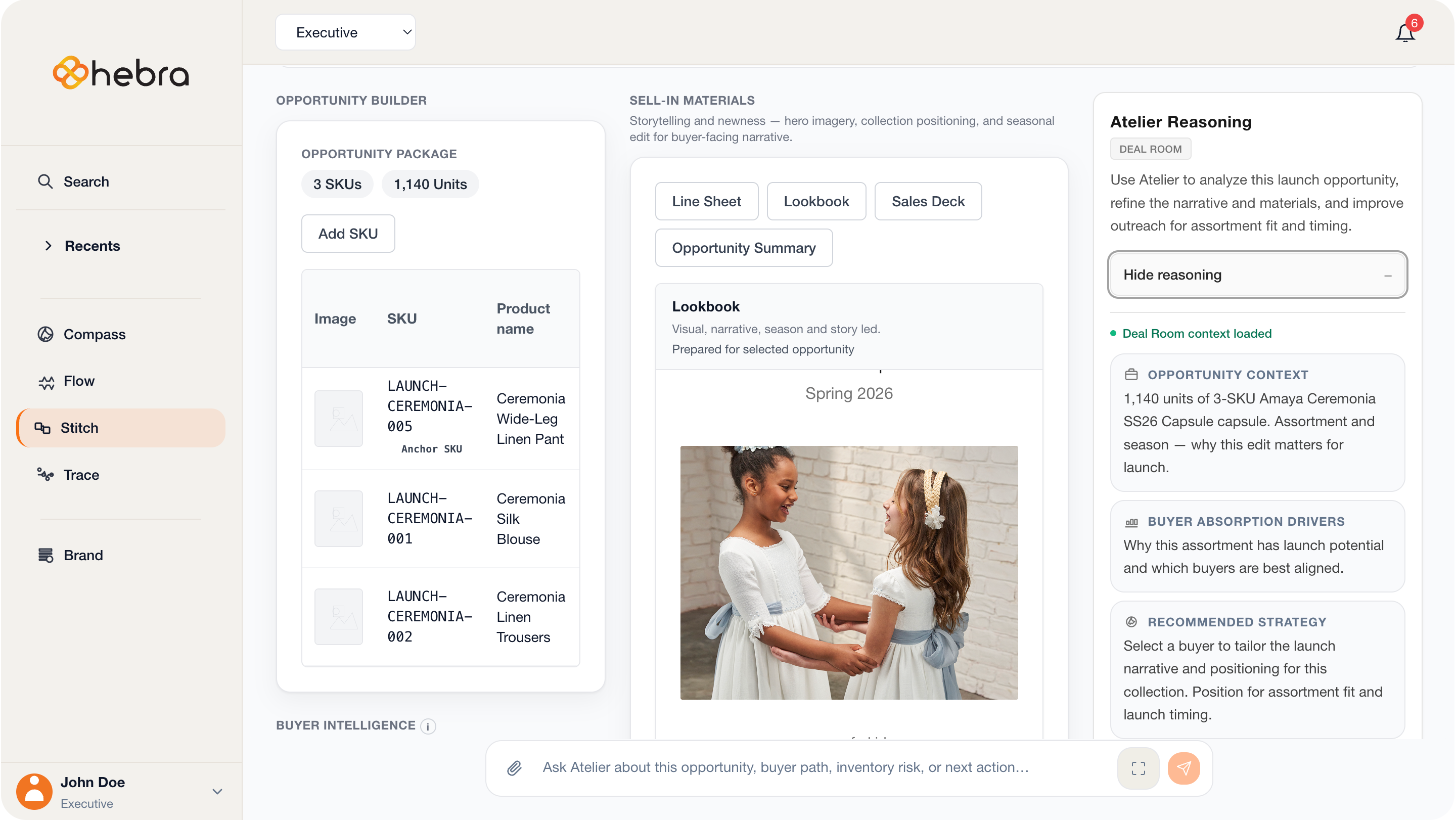
Deal Room is where Stitch opportunities become buyer-ready sell-in packages. Teams can evaluate buyer matches, assemble the opportunity, generate materials, and prepare outreach.
Capabilities
- Opportunity packaging built from Stitch and Flow context
- Buyer intelligence across historical and future market matches
- Automated sell-in materials including line sheets and lookbooks
- Atelier-guided strategy and outreach preparation
Trace
Lifecycle & Compliance Intelligence
Maintain transparency across the product lifecycle.
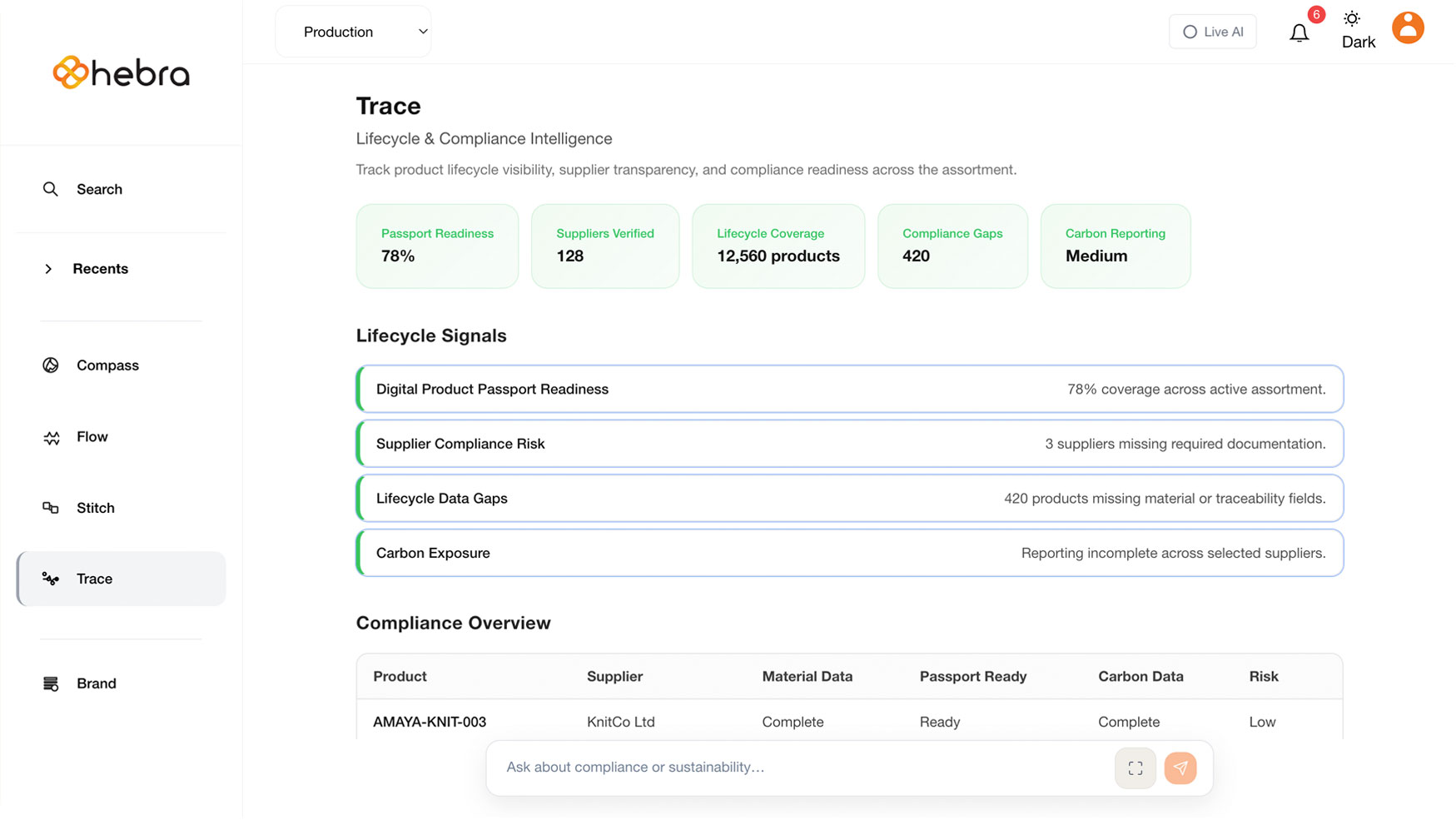
Trace provides visibility across suppliers, materials, and products to support sustainability initiatives and regulatory readiness.
Capabilities
- End-to-end supply chain transparency
- Digital Product Passport readiness
- Sustainability scoring aligned with ESG benchmarks
- Supplier compliance monitoring
Atelier
AI Reasoning Engine
The intelligence layer that explains every decision.
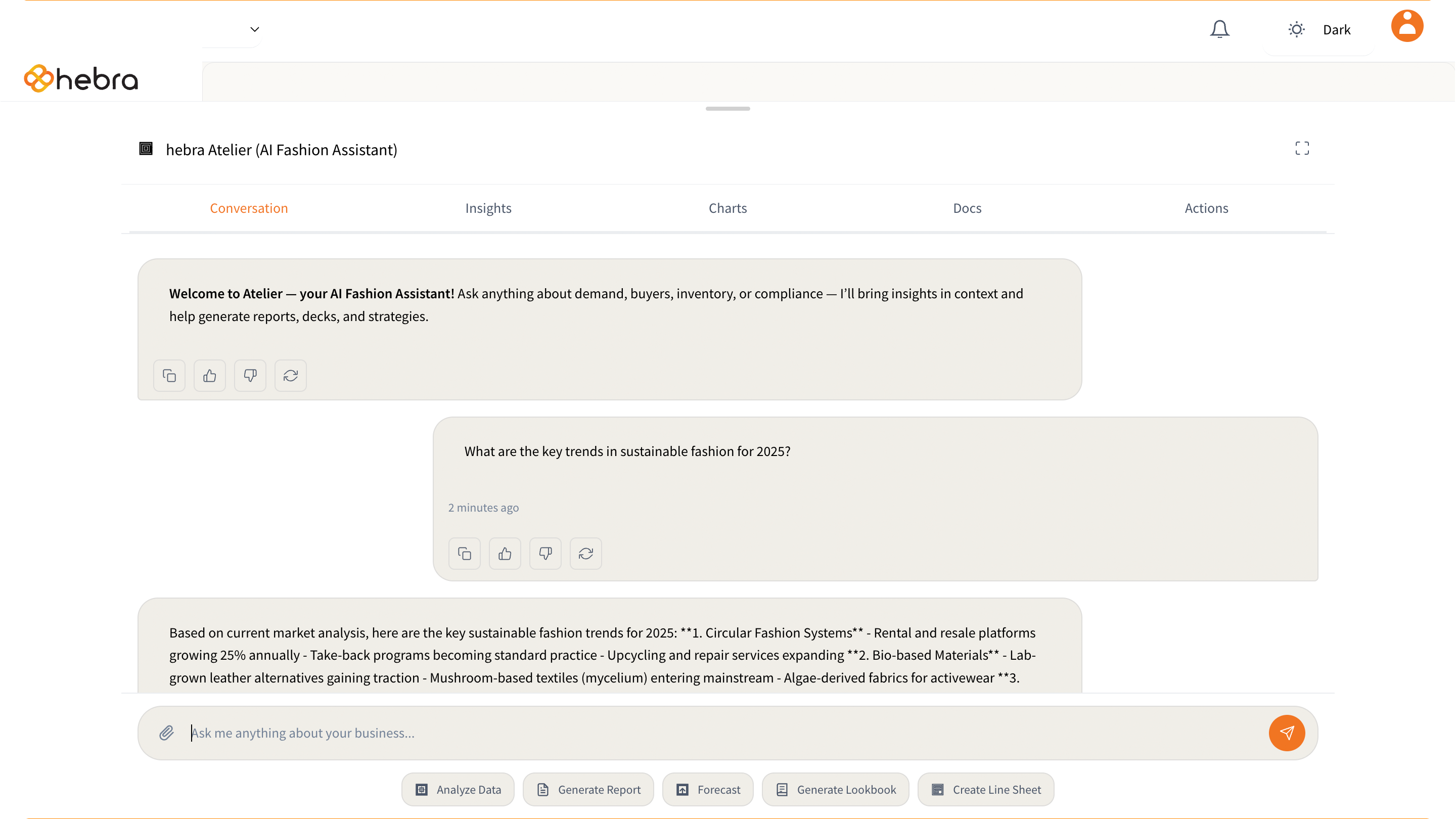
Atelier interprets signals across Compass, Flow, Stitch, and Trace to explain why inventory risk exists, which decisions should be prioritized, and what actions teams should consider next.
Capabilities
- Real-time answers grounded in operational data
- AI-driven insights across sales, inventory, and demand signals
- Executive-ready operational summaries
- Automated buyer decks and opportunity materials
- Cross-system reasoning across the entire platform
Seamless Integration
Hebra AI is API-first and designed to connect with the operational systems fashion brands and retailers already use.
Rather than replacing existing tools, Hebra interprets signals from across the fashion stack — turning fragmented operational data into structured inventory decisions.
ERP & Inventory Systems
Designed to ingest inventory, purchasing, and financial signals from enterprise systems used to manage stock and operational performance.
Examples may include SAP, Oracle NetSuite, and similar ERP platforms.
Commerce Platforms
Built to incorporate demand signals, product performance, and inventory availability from digital commerce environments.
Examples may include Shopify, Magento, WooCommerce, and similar platforms.
Product Lifecycle Systems (PLM)
Structured to incorporate product attributes, assortment planning data, and lifecycle information used by merchandising and product teams.
Examples may include Centric, Flex, and other PLM systems used in fashion.
CRM & Wholesale Systems
Designed to incorporate account relationships, wholesale signals, and customer data into decision workflows.
Examples may include Salesforce, HubSpot, and similar CRM environments.
Marketing & Demand Signals
Hebra can incorporate signals from marketing platforms and social channels to enrich demand understanding and product performance insights.
Examples may include Google Ads, Meta, Instagram, TikTok, Pinterest, and similar platforms.
Ready to transform your fashion intelligence?
See how hebra AI can revolutionize your data, optimize your growth, and unlock sustainable strategies for your fashion brand.